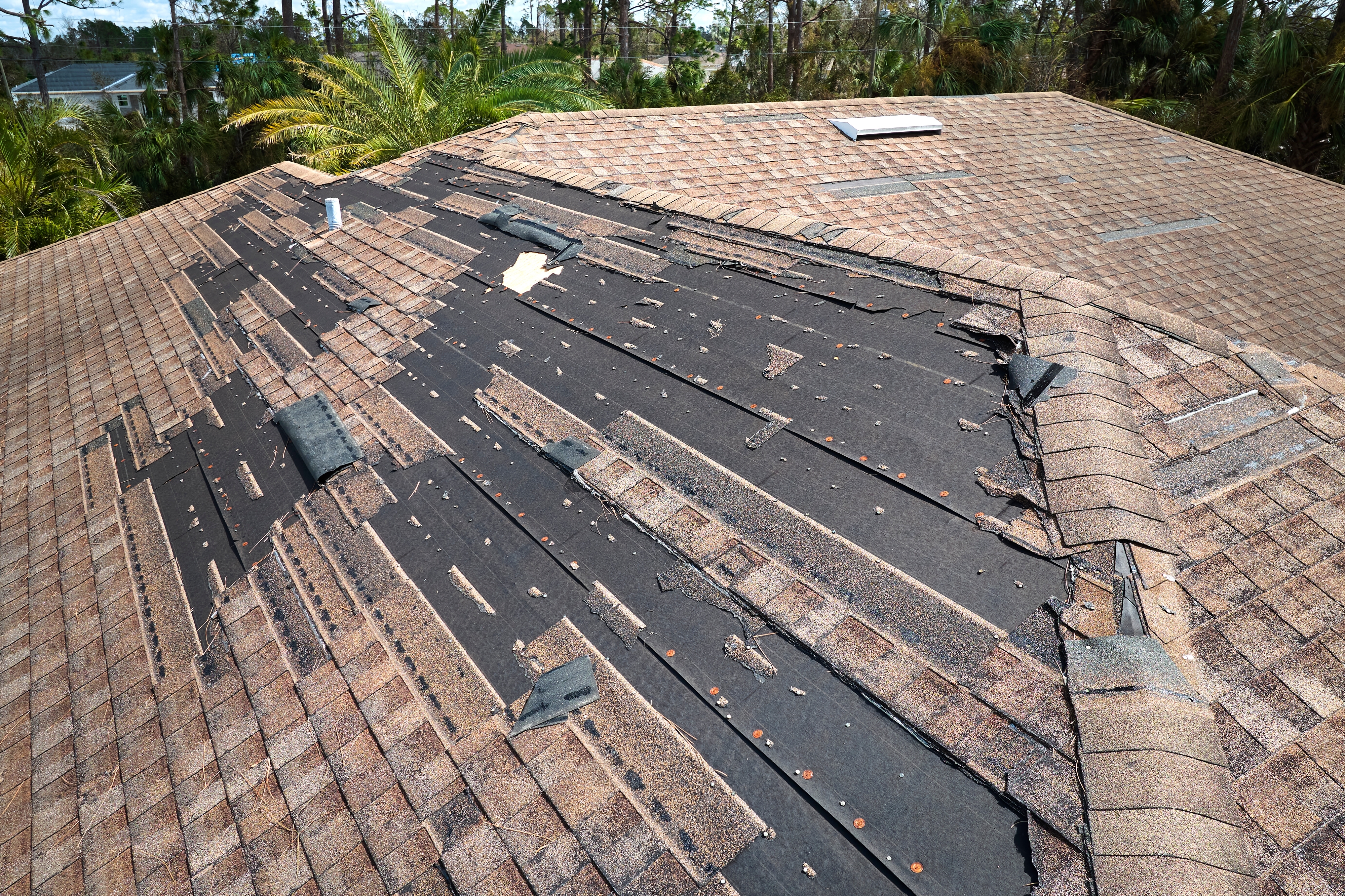
Not every shingle problem means the same thing. Curling usually means the roof is aging out and losing flexibility. Cracking usually means UV exposure and heat have dried out the asphalt underneath. Bald or granule-bare patches mean the shingle’s protective layer is gone and the mat underneath is exposed directly to the sun. Seeing one of these on an isolated shingle is normal wear. Seeing any of them spread across multiple slopes of the roof is a sign that the whole system, not just a shingle here and there, is reaching the end of its service life.
What’s Actually Happening to the Shingle
An asphalt shingle is a fiberglass mat saturated with an asphalt binder and coated with mineral granules. When the shingle is new, oils in that binder keep it flexible and help the granules stay bonded to the surface. Heat and UV exposure gradually dry those oils out, a process called oxidation, and that is what makes an aging shingle stiff, brittle, and prone to cracking and curling. Granule loss is a related but separate problem: once granules wear away or get knocked loose, the asphalt underneath loses its UV protection and degrades faster than the rest of the roof around it.
What Causes It
- Age and normal weathering. Asphalt shingles are generally built for a service life of roughly 20 to 30 years depending on material quality, and these symptoms typically become visible in the back half of that range.
- Heat trapped by poor attic ventilation. An attic that cannot exhaust hot air bakes the underside of the roof deck, which accelerates oxidation and can shorten a shingle’s working life well before it should need replacing. More on how that works on our attic ventilation page.
- Sun exposure by slope. South- and west-facing slopes see more direct sun over the life of the roof and tend to show cracking and granule loss before north-facing slopes do.
- Storm impact. Hail can knock granules loose in a pattern that looks like accelerated aging rather than a single event, which is one reason granule loss appearing right after a storm is worth a closer look.
How to Tell the Three Apart
The National Roofing Contractors Association lists granule loss, curling, and cracking among the standard visual indicators used to evaluate asphalt shingle condition during a roof inspection. Here is what separates the three.
Curling
Edges turning upward, called cupping, or the middle of the shingle rising, called clawing, both indicate curling. It usually shows up first on older, sun-exposed slopes and tends to spread once it starts, because a curled shingle no longer lies flat against the one below it.
Cracking
Cracks usually run in a line, often near the shingle’s tab cuts, and are most visible after a hot afternoon once the asphalt has fully expanded. A handful of isolated cracks can sometimes be addressed shingle by shingle. Cracking spread across a slope means the asphalt itself has lost its flexibility roof-wide.
Bald Spots and Granule Loss
Check your gutters and downspouts after a rain. A small amount of loose granules is normal, especially in the first year or two after installation. Consistent, heavy accumulation season after season, or visible patches where the black asphalt mat shows through the shingle, both point to a shingle that has aged past the point of still protecting the roof deck the way it should.
DIY vs. Professional Assessment
Checking gutters for granules and scanning the roofline from the ground for curling or discoloration is something any homeowner can and should do a couple of times a year. What you cannot assess from the ground, or safely from a ladder, is the roof deck underneath. ARMA lists specific conditions that rule out a simple shingle recover and require a full tear-off: sagging along the ridge or truss lines, rotted or warped deck wood, and gaps wider than a quarter inch between deck boards. None of that is visible until the old shingles come off, which is why a professional inspection matters more than a visual check from the yard once wear is widespread.
When Repair Makes Sense and When It Doesn’t
A handful of curled or cracked shingles on an otherwise sound, younger roof is often something a targeted repair can fix. Once curling, cracking, or granule loss shows up across more than a small section of the roof, patching stops being cost-effective. At that point you are no longer fixing an isolated defect, you are maintaining a roof that has aged out as a system, and every repair after that is a temporary fix on a roof that has already passed its working life. That is the point where a full roof replacement, done once with matched components rather than patched piecemeal, becomes the more durable option.
What This Looks Like in Northern Virginia and Suburban Maryland
The Mid-Atlantic climate works both ends of an asphalt shingle at once: humid, high-UV summers that dry out the asphalt binder, and freeze-thaw winters that stress a shingle that has already lost flexibility. The U.S. Department of Energy notes that attic heat buildup is one of the more preventable accelerants of roof aging, which is why roofs across Fairfax, Loudoun, Prince William, Montgomery, and Prince George’s counties that are in their late teens to twenties in age, and sitting on attics that were never upgraded for proper intake and exhaust, tend to be the ones showing these signs earliest.
When to Call Affordable Home Solutions
Affordable Home Solutions replaces roofs, we don’t patch them, which means every inspection starts by figuring out whether what you’re looking at is isolated wear or a system nearing the end of its life. As a TAMKO Pro Diamond Contractor licensed in both Virginia (Class A #2705084385) and Maryland (MHIC #142051), we check the attic and ventilation as part of every free inspection, because mismatched ventilation is one of the most common reasons a roof shows these signs early. If the roof needs replacing, we lay out two complete system options, a TAMKO Heritage system and a matched TAMKO Titan XT system carrying up to a 50-year material warranty, side by side in writing the same day, so you’re choosing between real options instead of reacting to a single number. Call us or request a free inspection to find out which category your roof is actually in.