
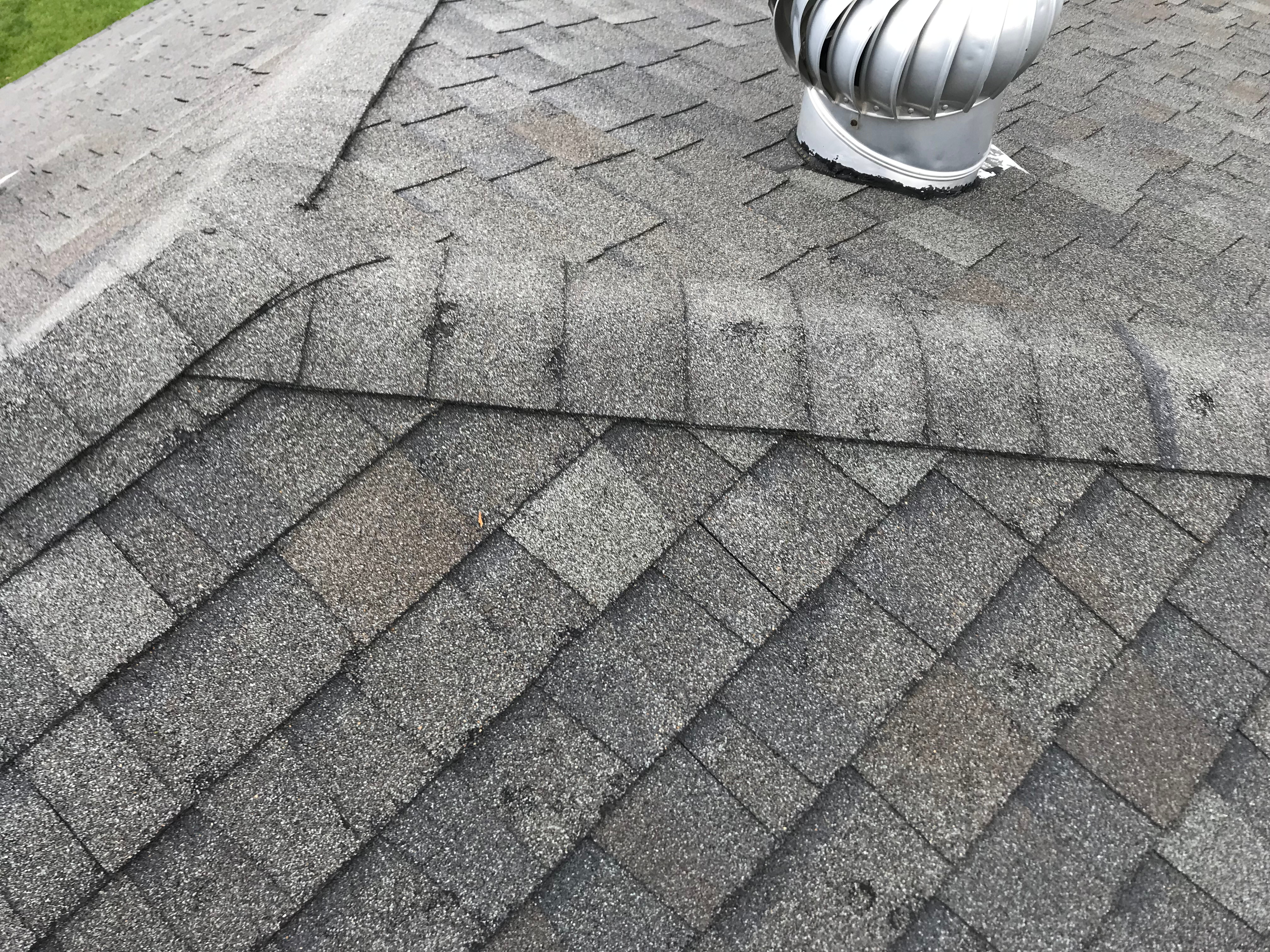
After a hailstorm, most homeowners look up, see the roof still in one piece, and assume it came through fine. That assumption is usually wrong. Hail damage on an asphalt shingle roof rarely looks dramatic. It shows up as small, dark, soft spots where granules have been knocked loose or the mat underneath has been bruised, not as holes or missing shingles. The damage that actually shortens a roof’s life, and the damage an insurance carrier will pay to fix, is often invisible from the driveway.
What Counts as Hail Damage on a Shingle Roof
Two different things can happen when hail hits a shingle: cosmetic marking and functional damage. Cosmetic damage is a mark or discoloration that does not affect how the shingle performs. Functional damage breaks the shingle’s protective layer, either the granule coating or the asphalt mat underneath, in a way that shortens its working life or opens a path for water. Insurance carriers only pay to replace functional damage, which is exactly why an untrained eye tends to either miss it entirely or overstate it in the other direction.
What Causes Hail Damage
- Hailstone size and density. Stones under an inch across rarely cause functional damage to a roof in good condition. Stones an inch or larger, roughly quarter-sized and up, are far more likely to bruise the mat underneath the granules.
- Impact angle and wind. Wind-driven hail hits at an angle and concentrates damage on one or two roof slopes rather than spreading it evenly, which is one reason a quick walk of the whole roof can miss it.
- Shingle age and brittleness. Older shingles that have already lost flexibility bruise and crack more easily than newer ones under the same hail impact.
- Granule adhesion. A newer roof holds its granules more tightly, so hail on a roof only a few years old may show less visible surface marking even when there is real impact underneath.
Warning Signs of Hail Damage
- Small, random, dark spots on shingles that look bruised rather than torn
- Granules collecting in gutters, downspouts, or on the ground below downspouts after a storm
- Dents on soft metal near the roofline: gutters, roof vents, flashing, and any HVAC housing or AC condenser fins in the yard
- A damage pattern scattered across the roof rather than confined to one small area, following the direction the storm moved
- Cracked or split shingles, particularly on the slopes facing the direction the hail came from
Soft metal is the easiest place to start looking, because gutters, vents, and AC fins dent more visibly and at a lower impact threshold than shingles do. Consistent dimpling on those surfaces is a strong signal to have the roof itself inspected, even if it looks fine from the ground.
DIY vs. Professional Inspection
A homeowner can and should do a ground-level check right after a storm: walk the perimeter, check the gutters and downspouts for loose granules, and look at soft metal for dimpling. What a homeowner should not do is climb onto the roof to inspect it. Bruised mat under intact granules is genuinely difficult to identify without training, walking a damaged roof can turn a repairable slope into a bigger problem, and self-inspection photos rarely carry the same weight with a carrier as documentation from a professional roof inspection.
What to Do Next
- Photograph what you can see from the ground, including gutters, downspouts, and any dented soft metal, and note the date of the storm.
- Request a professional inspection promptly. Some policies tie the filing window to the date of loss, so waiting reduces your options.
- Get the inspection from a contractor who documents every slope and elevation, not just the side facing the street.
- Be cautious of contractors who arrive door to door immediately after a storm and push for a same-day signature. A permanent local office and a real license number are worth checking before anyone gets on your roof.
- If damage is confirmed, you file the claim with your own carrier. Under Virginia Code § 38.2-1845.12, only a licensed public adjuster or you as the policyholder can negotiate a claim. A roofing contractor can document the damage and prepare an estimate, which is what most homeowners actually need to move forward, but that is a different role from filing or negotiating on your behalf. More on how that process works is on our roof insurance claims page.
Hail in Northern Virginia and Suburban Maryland
Hail is not rare in this region. The NOAA Storm Events Database has logged more than 6,000 hailstorm events in Virginia and over 1,500 in Maryland since record-keeping began in 1950. Both states sit in a corridor where spring and summer supercells regularly cross state lines, so a storm that drops hail in Loudoun County one afternoon can produce the same conditions in Montgomery County a short time later. The Insurance Institute for Business & Home Safety maintains detailed guidance on how hail impact is assessed on residential roofing, which is the same standard a qualified inspection should be measured against.
When to Call Affordable Home Solutions
If you suspect hail damage anywhere in Fairfax, Loudoun, or Prince William County, Virginia, or Montgomery or Prince George’s County, Maryland, Affordable Home Solutions provides a free on-site inspection that includes the attic and ventilation, not just the shingles. As a TAMKO Pro Diamond Contractor, one of only a handful in the DMV, and a company licensed in both states (VA Class A #2705084385, MHIC #142051), we document what a storm actually did to your roof and put that documentation in writing the same day, whether or not you decide to file a claim. Homeowners across our 4.7-star Google review base describe the same thing: a straight answer after a storm, not a sales pitch. If the damage is significant, we can also handle the storm damage repair itself once the scope is confirmed. Call us or request a free inspection to find out whether your roof took real damage or simply weathered the storm.