Commercial Roofing in Northern Virginia & Maryland
Your Building Stays Open While the Roof Gets Done
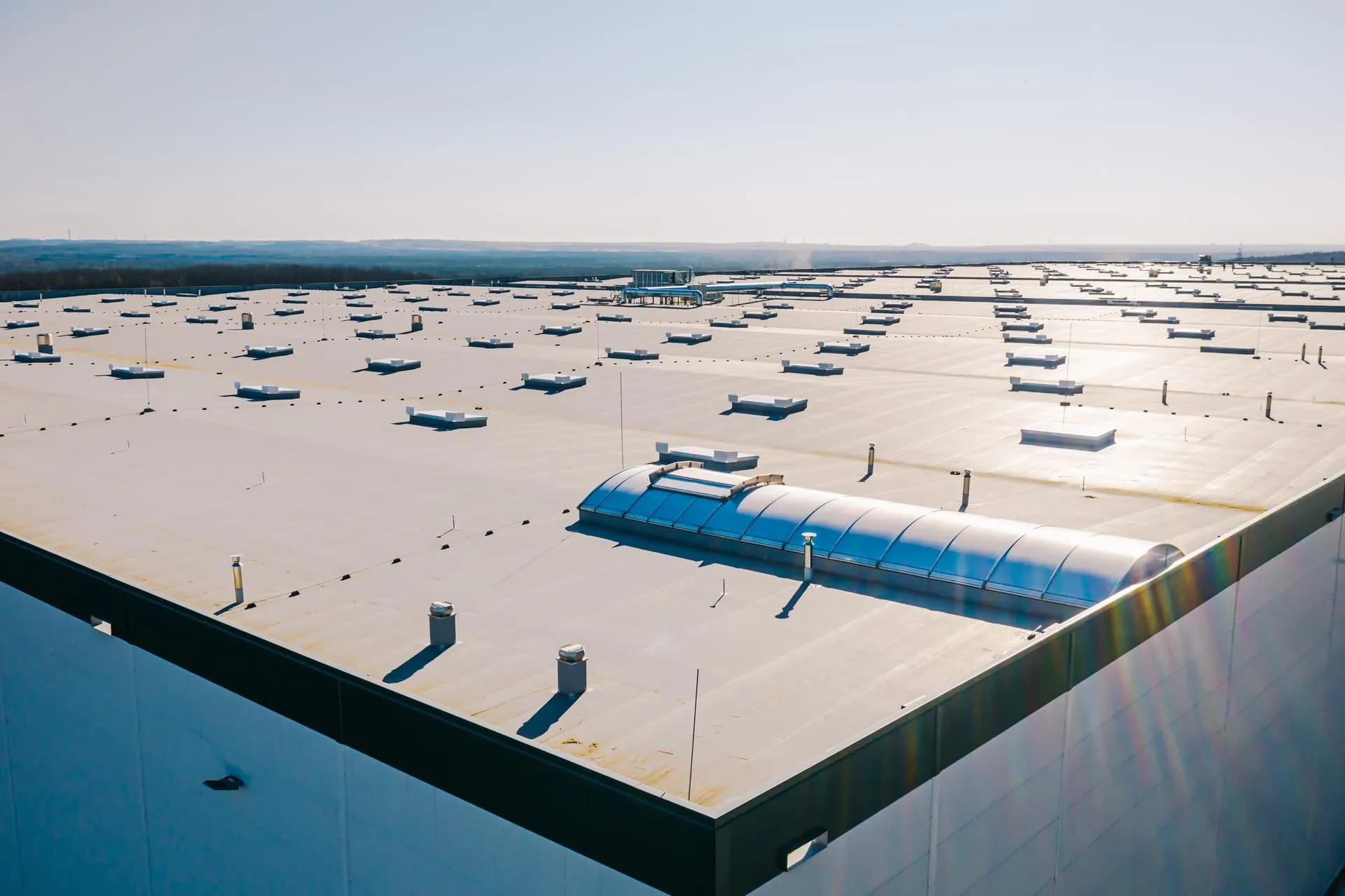
TPO, PVC, and modified bitumen systems for flat and low-slope roofs across Northern Virginia and suburban Maryland, scheduled around your tenants so the building never loses a day.
Call us now
(301) 861-7445TAMKO Diamond Contractor



Licensed VA Class A #2705084385 · MHIC #142051 · Insured
What homeowners say
Real reviews from the DMV
Jason Reynolds
6 months ago
We had our roof replaced last month by AHS and the process was great. Kevin Diaz came out and did a great job with the initial roof inspection and walk through of the process. Rama did a fantastic job with explaining the options and costs and getting everything setup and then keeping on top of everything. The crew was friendly and professional and did an excellent job with the install and the cleanup. Finally, Lukas Turner was great with the post install inspection and walkaround.
Joe Jones
6 months ago
Just completed the final process for a new roof constructed by AHS. I was thoroughly impressed with AHS’s personnel specifically Brock Doctson. He took us through the entire process from talking to the insurance company to physically coming to the house for payment when needed. He explained the entire process in great detail and was very attentive in following up and answering any questions. AHS should be very proud of his work ethic. Will recommend this company to anyone.
Lizy Mejia
7 months ago
We just got our roof repaired with Affordable Home Solutions and we love our new roof. Ross came to our house to look at our roof and immediately told us to get in contact with our insurance while he was there. Throughout the process he was always checking in about the status and was patient with us as well. We had a leak one night and I let him know, next day he was covering the roof with a tarp where the leak was coming from.
The systems
TPO, PVC, or Modified Bitumen: Which Does Your Building Need?
It's decided by what lands on the roof. PVC resists grease, oils, and chemical exhaust, so it goes on restaurants and industrial buildings. TPO costs less and performs just as well on a clean roof without that exposure. Modified bitumen is the most repairable and the most tolerant of foot traffic, which matters when there is equipment up there getting serviced. Putting TPO on a restaurant is the most common mistake in commercial roofing and the most expensive one to undo.
- TPO
- A single-ply thermoplastic membrane, heat-welded at the seams, usually white so it reflects heat. It's the default for good reason: it performs well and it costs less than PVC. It belongs on a clean roof, meaning one with no grease or chemical exhaust landing on it.
- PVC
- Also single-ply and heat-welded, and chemically it's the tougher membrane. It resists grease, oils, and chemical exhaust, which is why it goes on restaurants, commercial kitchens, and industrial buildings. It costs more, and on the wrong building that premium is wasted.
- Modified bitumen
- An asphalt-based membrane in reinforced layers, torch, cold, or self-adhered. It's the most repairable system on this list and the most forgiving of foot traffic, which matters on a roof with equipment that gets serviced.
One thing to be clear on: this is commercial work. We don't take flat residential roofs. If you own a home with a flat or low-slope roof, we're not the right contractor for it, and knowing that now is worth more to you than a survey appointment.
The process
How a Commercial Roof Project Works
Five steps, and two of them exist because your building has people in it. Flat roofs fail at their details, commercial projects fail at their coordination, and the process is built around both.
Survey the roof and find the water
A free survey that maps where the assembly is wet, not just where the membrane looks tired. Saturated insulation is what decides repair against replacement, and it's invisible from a walk-around.
Report the scope in writing
Photographs, the failures located, and the options with what each costs. Written to be forwarded to an owner or a board, because you're rarely the only person who has to approve it.
Tell you whether it's repair or replacement
If the membrane has life and the failures are at seams, penetrations, and flashings, that's a repair and a replacement would be premature. If the insulation is saturated, sealing it in isn't an option and we'll say so.
Coordinate access, staging, and your hours
The building stays open and operating. We settle access, parking, roof equipment, and the working window before the first day, because tenant disruption is a scheduling problem, and we plan it out before day one instead of reacting to it.
Install, inspect, and hand over the documentation
The system goes on to the manufacturer specification, the details get inspected, and you get warranty registration and closeout documents. If a lender or an insurer needs proof of the work, it exists.
Repair or replace
Can Your Flat Roof Be Repaired Instead of Replaced?
Usually yes, if the insulation underneath is dry. That's the line that separates a maintenance line item from a capital request, and it isn't visible from the roof surface. A moisture survey tells you which one you're looking at, and we'd rather find you a repair this year than sell you a replacement you didn't need, because the replacement comes to us in five years either way.
Repair is usually right when
- The membrane has service life left in the field
- Failures are at seams, penetrations, or flashings
- The insulation below is dry
- Leaks are traceable to specific details
- The roof has been maintained
Replacement is usually right when
- A moisture survey shows saturated insulation
- The membrane is at the end of its service life
- Repairs are recurring across the roof
- The deck is compromised
- The system was wrong for the building to begin with
What determines the price of a commercial roof
Square footage sets the floor, and then four things move it: the system you choose, the condition of the existing insulation and deck, the number of penetrations, drains, and curbs, and how material gets onto the roof. Access is the one that surprises owners most. A roof with no crane position and a shared loading dock is a different project from an identical roof with an open lot beside it, and no rate per square foot survives contact with either.
The cheapest money on a flat roof
Preventive maintenance. Twice-yearly inspection with the drains cleared and the seams and flashings checked catches failures while they're still a tube of sealant rather than a claim and a saturated deck. Most of the flat roofs we're asked to replace early were never looked at, and that's the whole reason they were early.
Where we work
Commercial Roofing Across the DMV
Licensed in both Virginia and Maryland out of our Falls Church office. Our Virginia Class A license is the class with no dollar limit on project size, and a contractor's license class is worth checking against the size of your project before you sign anything.
Credentials
Licensed, Insured, and Your COI Is Ready
We carry full liability and workers compensation coverage and can provide certificates of insurance naming your entity, which is usually the first thing you need and the last thing a contractor sends. Our Virginia Class A contractor license #2705084385 is the class with no dollar limit on project size.
MHIC #142051
Maryland Home Improvement Commission
VA Class A Contractor #2705084385
Virginia DPOR
TAMKO Diamond Contractor
TAMKO Building Products
GAF Certified Contractor
GAF
Owens Corning Preferred Contractor
Owens Corning
BBB Accredited, A+ Rating
Better Business Bureau
Questions
Commercial Roofing Questions, Answered
What is the difference between TPO and PVC?
Both are single-ply membranes and the practical difference is chemical resistance and price. PVC resists grease, oils, and chemical exhaust, which is why it goes on restaurants and buildings with kitchen or industrial exhaust. TPO costs less and performs well on a clean roof without that exposure. Putting TPO on a restaurant is the most common and most expensive version of this mistake.
How long does a commercial flat roof last?
Twenty to thirty years for a well-installed single-ply membrane that is actually inspected, and considerably less for one that isn't. Flat roofs fail at the details rather than in the field: the seams, the penetrations, the flashings, and the drains. The membrane is rarely what gives out first.
Can you repair a flat roof instead of replacing it?
Often, and it's usually the right first question. If the membrane has life left and the failures are at seams, penetrations, or flashings, those are repairable and a replacement would be premature. When the insulation underneath is saturated, repair stops making sense, because you would be sealing water inside the assembly. A moisture survey tells us which situation you are in.
Do you have to close the building during a roof replacement?
No. Commercial roofing is done from above with the building operating underneath, and we sequence and stage the work around your hours. What we do need is coordination on access, parking, and any equipment on the roof. Tenant disruption is a scheduling problem, and it's one we plan for before the first day rather than manage on it.
How much does a commercial roof cost?
It's priced by the square foot and driven by the system you choose, the condition of the existing insulation and deck, the number of penetrations, drains, and curbs, and how material gets onto the roof. Access is a bigger factor than owners expect. We survey the roof and put a scope and a number in writing rather than quote a rate per square foot that no real roof matches.
Do you offer preventive maintenance on commercial roofs?
Yes, and on a flat roof it's the highest-return money you will spend. Twice-yearly inspection with the drains cleared and the seams and flashings checked catches the failures while they're still a tube of sealant instead of a claim and a saturated deck. Most of the flat roofs we are asked to replace early were never looked at.
Do you do flat roofs on houses?
No. We don't take flat residential roofs, and that's a firm scope boundary. This service is for commercial buildings: TPO, PVC, and modified bitumen on commercial structures.
Are you licensed and insured for commercial work?
Yes. We hold Virginia Class A contractor license #2705084385, which is the class with no dollar limit on project size, along with Maryland Home Improvement Commission license #142051. We carry full liability and workers compensation coverage, and we can provide certificates of insurance naming your entity. Ask for them before you let any contractor start, ours included.
Need a Roof Survey?
The survey is free and it ends with a written scope, photographs, and options you can forward to an owner or a board. If the roof is repairable, that's what the report will say.
Crews Monday to Saturday. Office phones Monday to Friday.